UNDERGRADUATE RESEARCH / HYBRID AI SYSTEM

BATINARA

Hybrid LLM-BERT-ML Chatbot for Safe Mental Health Support

A research-driven mental health support chatbot that combines crisis detection, multi-label emotion recognition, clinical screening, and LLM-based response generation in one neuro-symbolic workflow.
IJCCS · Vol. 20 No. 2 · 2026 DOI: 10.22146/ijccs.112432
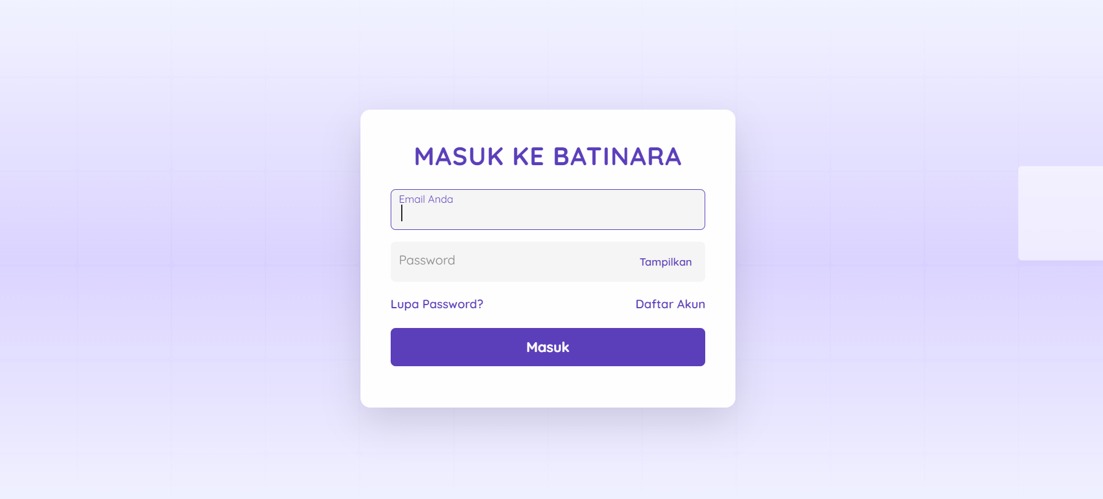
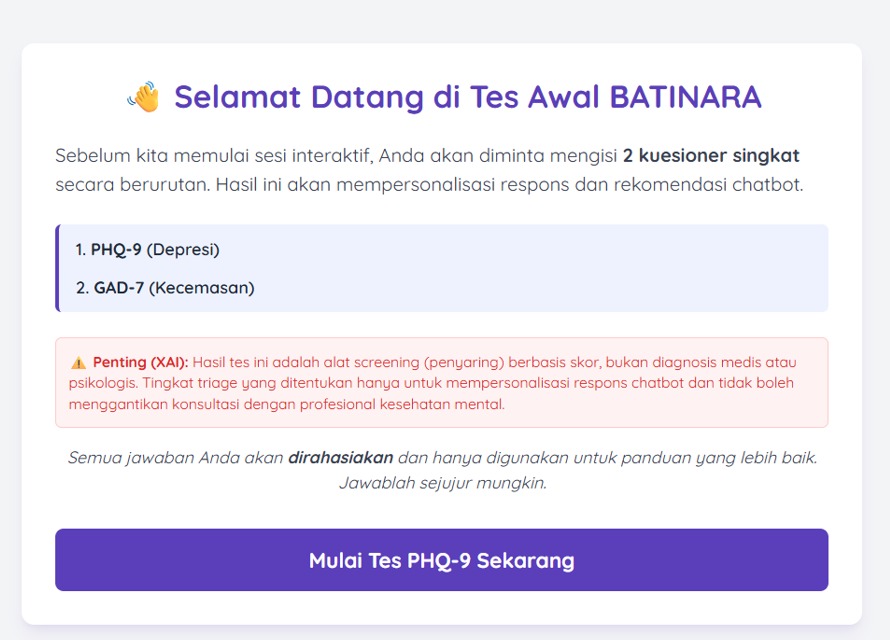
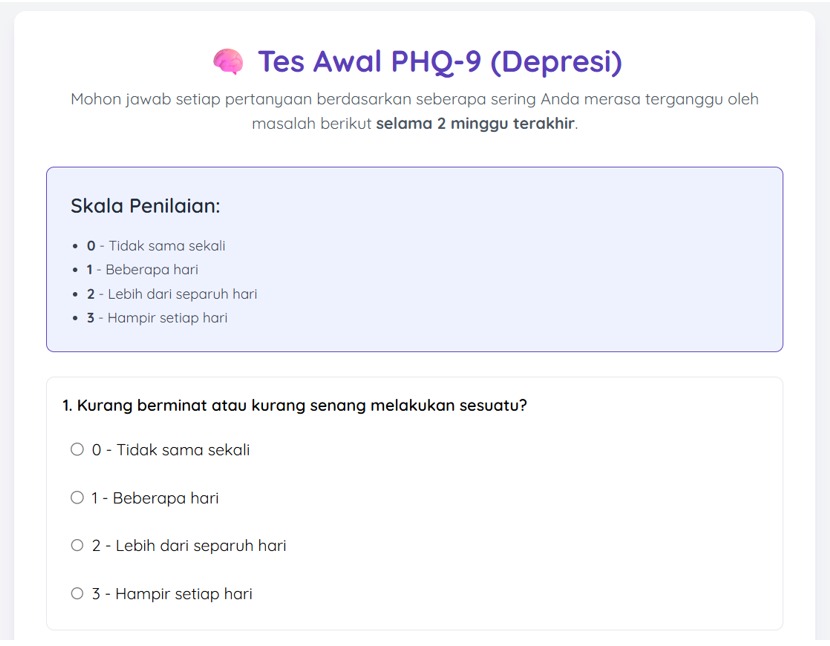
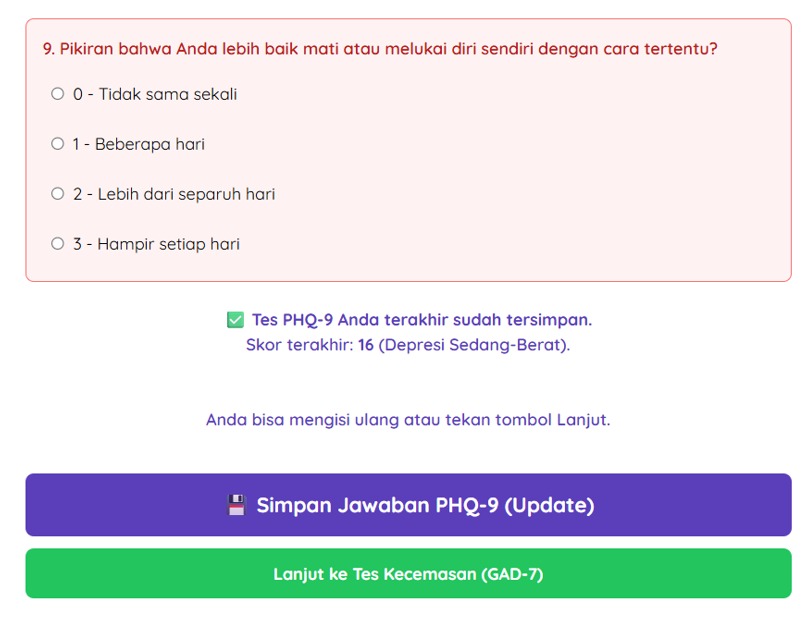
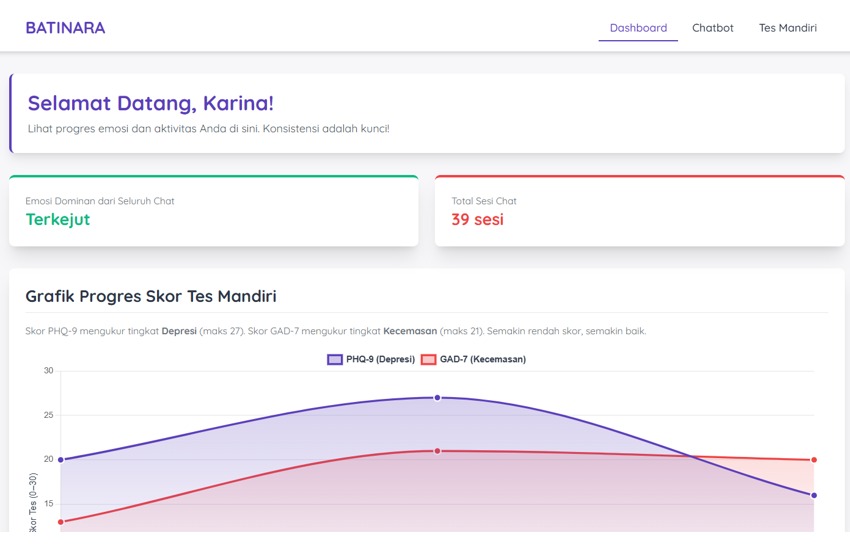
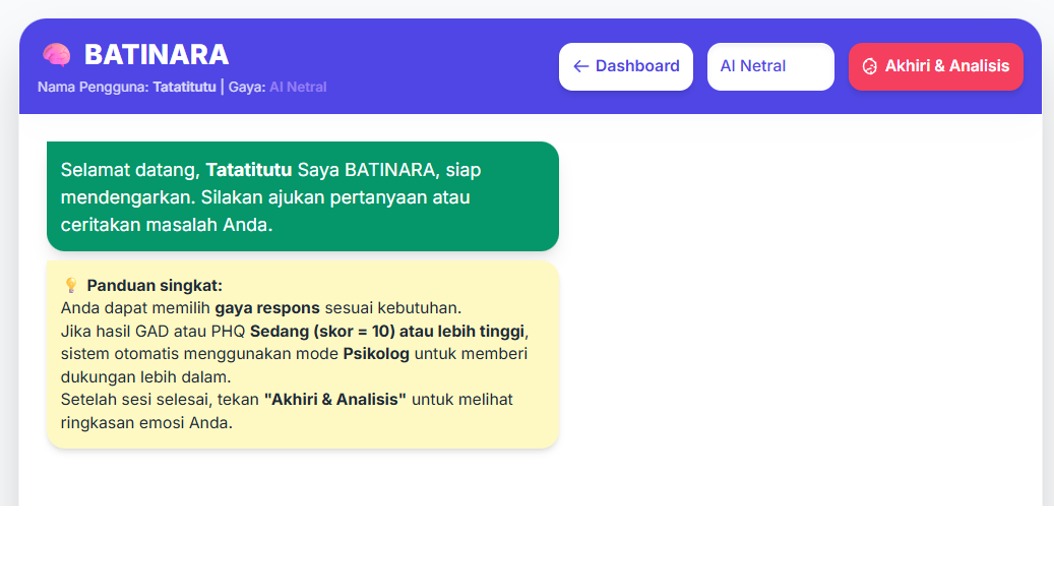
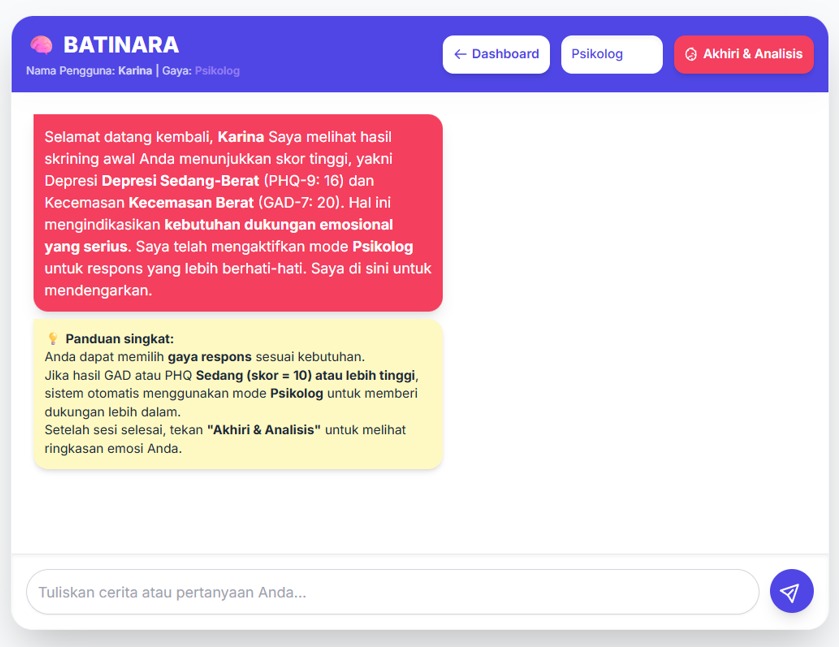
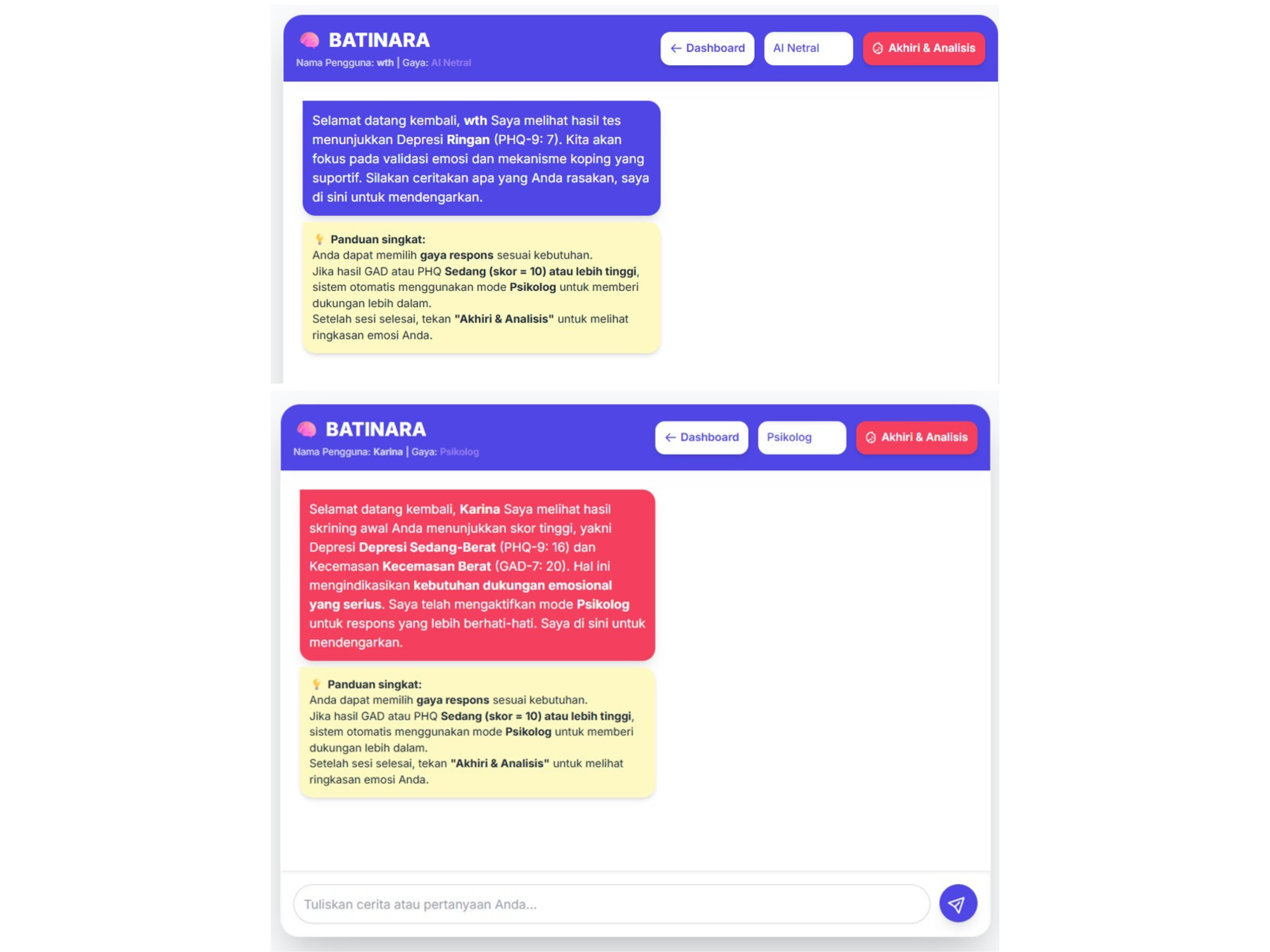
BATINARA main interface preview
Jeanette Walangitan · Erik Iman Heri Ujianto
University of Technology Yogyakarta
Neuro-Symbolic AI · Emotion Detection · Safety Net
Safe & Personalized Mental Health Support
01 / OVERVIEW

The research idea behind BATINARA.

What problem does it solve?

BATINARA was designed to address a key challenge in AI-assisted mental health support: large language models can be empathetic and flexible, but they may also produce unsafe or inappropriate responses during high-risk situations.

This project builds a safer hybrid architecture where predictive modules handle crisis detection and emotional understanding first, then guide the generative module through rule-based ethical control.

Core idea

A neuro-symbolic hybrid system that combines machine learning, BERT-based safety filtering, and LLM response generation.

Research contribution

BATINARA emphasizes safety, contextual personalization, and transparent emotion visualization rather than using generative AI alone.

02 / KEY RESULTS

What the system demonstrates.

Crisis Detection 0.9977

IndoBERT recall for detecting suicidal ideation and triggering safety override.

Emotion Recognition F1 = 0.94

Multi-label emotion classification used to personalize the conversation context.

Clinical Logic PHQ-9 / GAD-7

Screening results help modulate response style and conversational support level.

Safety Principle Nonmaleficence

Ethical control is enforced through rule-based intervention logic and response override.

03 / SYSTEM ARCHITECTURE

How BATINARA works.

01

User Input

The system receives journal text or chat input from the user.

→
02

Safety Net

IndoBERT detects crisis-level intent and can override the generative pathway if risk is found.

→
03

Emotion Detection

Random Forest predicts multi-label emotions for contextual understanding.

→
04

D-CIL + LLM

Dynamic Context Integration Logic injects ethical and clinical context before the LLM generates a response.

Predictive Module

Combines IndoBERT for crisis detection and Random Forest for multi-label emotion classification.

Generative Module

Uses the OpenAI API to generate responses that adapt to user condition, emotional context, and chosen support style.

Dynamic Prompt Modulation

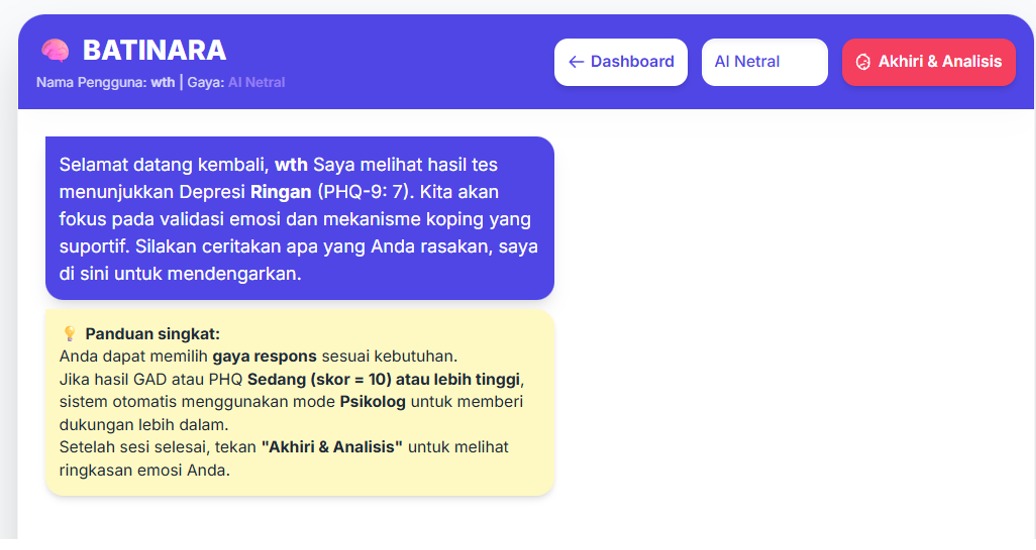
Adjusts the tone and support style using emotion signals, PHQ-9/GAD-7 results, and therapeutic personas.

Safety Override

When crisis intent is detected, the system prioritizes protective intervention over free-form generation.

04 / MY ROLE

What I worked on.

BATINARA was developed as my undergraduate research project. My work covered both the research and product side: dataset preparation, model experimentation, system design, interface flow, and implementation of the hybrid chatbot logic.

Research Design NLP Machine Learning Prompt Design UI / UX Frontend / Backend Prototype
Safety Module

Built the crisis detection flow using IndoBERT-based text classification.

Emotion Engine

Developed the multi-label emotion classification approach using classical ML.

Hybrid Logic

Structured the connection between predictive outputs, clinical screening, and LLM prompting.

Product Interface

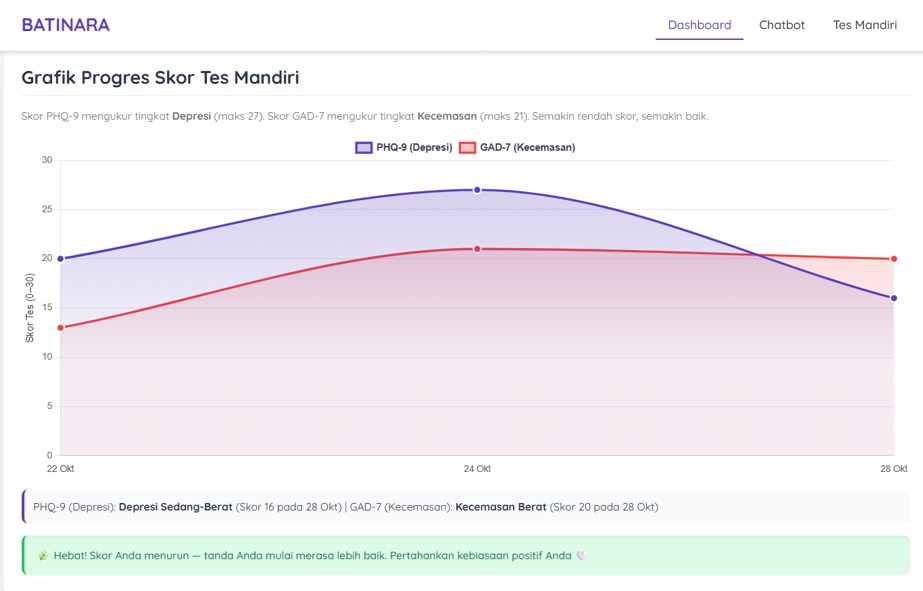
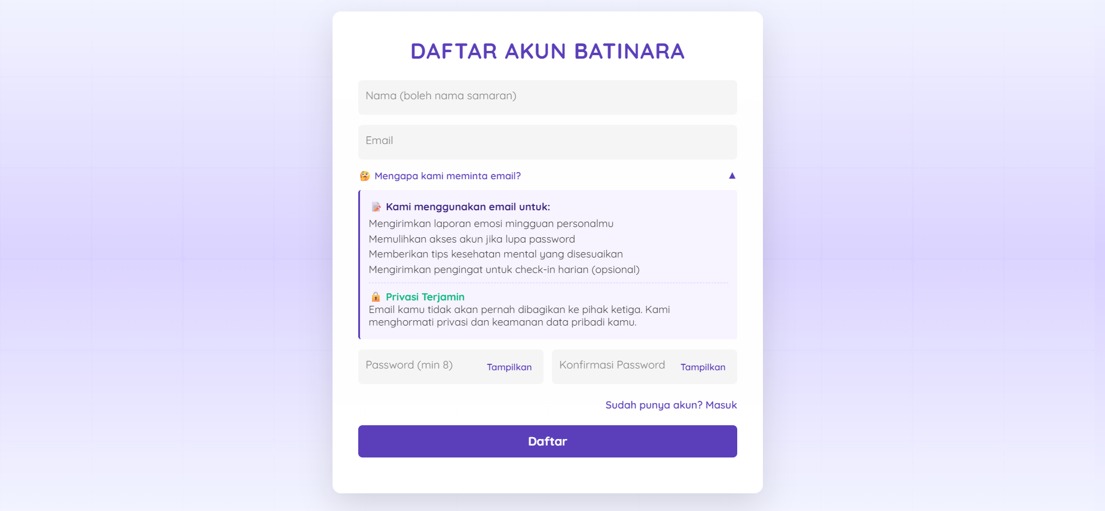
Designed the user flow for onboarding, self-test, dashboard, and chat experience.

06 / PROJECT HIGHLIGHTS

Why this project matters.

Safer AI Interaction

BATINARA is not only about generating responses, but about reducing harm in sensitive mental health contexts.

Personalized Support

Emotion signals and screening results help the system respond in a more adaptive and context-aware way.

Transparent Experience

The system visualizes emotional interpretation and user progress to improve clarity and trust.

Research + Product Thinking

This project combines academic research, AI system design, and interface development in one integrated workflow.

07 / READ MORE

Want to explore the publication itself?

You can read the journal page or open the full PDF to see the full methodology, abstract, and references.